Collection: Gerry Ruecker
Gerry Ruecker is a self-taught Regina artist of over 30 years, working in mixed media construction.
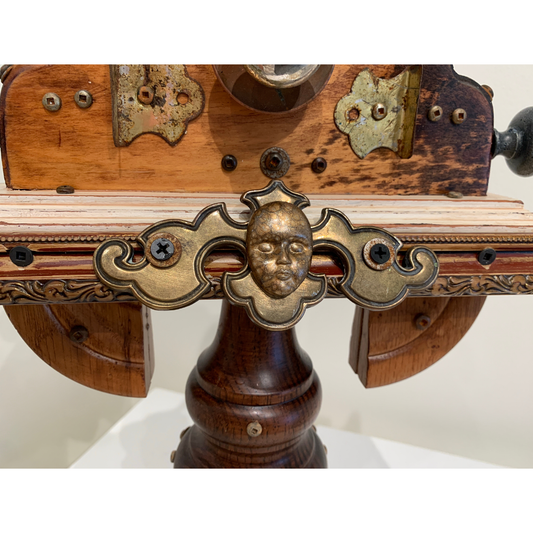
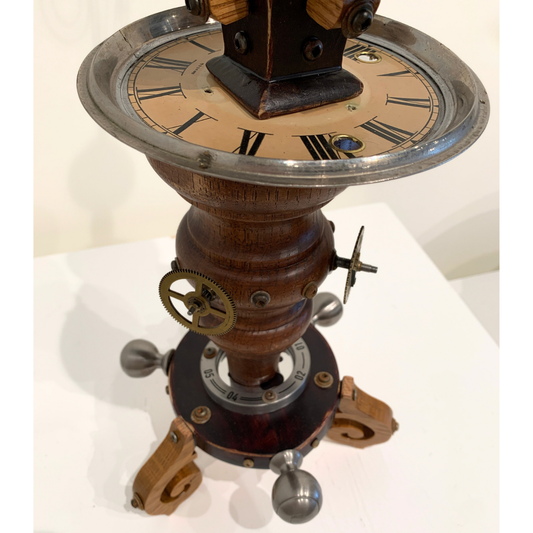
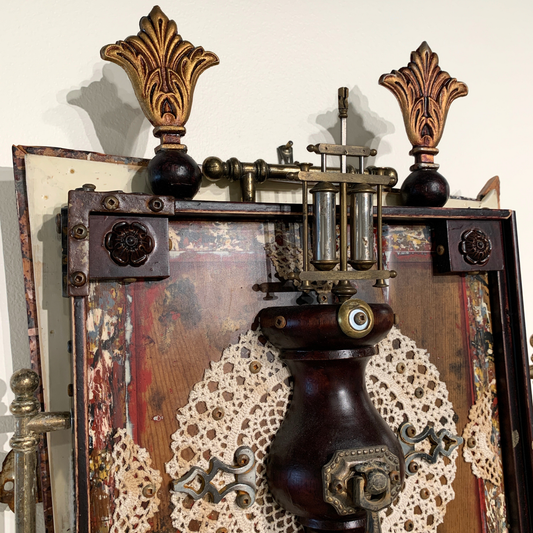
His current body of work, Un/Discard:Re/Form, explores the synthesis of two major personal influences; the work of Spanish Modernist architect Antoni Gaudi and Wabi-Sabi, the Japanese philosophy of imperfection and impermanence. The fusion of these two diametrically contrasting materials; the excessively elaborate baroque-styled picture frames, kitsch etc, along with the discarded, repurposed objects generally considered rubbish, gives birth to a new aesthetic; pieces that are visually pleasing as objects, but having a strong emphasis on contradiction, irony and incongruity, ‘gloriously raw and raggedly extravagant’!
Ruecker’s working method is intuitive and impromptu in nature, akin to the process of improvisation in music. Each sculpture is a continuous, step-by-step, exploratory process, with no predetermined plan or idea of how the piece will evolve or what particular materials will be involved in its creation.
Primary creative influences include the work of the Spanish architect Antoni Gaudi, American Sculptor Nick Cave, the Italian Design group Memphis, French sculpture Jean Tingely, and Wabi Sabi, the Japanese philosophy of imperfection and impermanence.
Mr Ruecker has exhibited frequently in Canada and Jamaica in solo and group shows, including the 2008 Jamaica Biennale, and his work can be found in numerous public and private collections, both nationally and abroad, including the City of Regina and the Saskatchewan Arts Board.

-
Untitled/titled/WhenEveryoneKnowsThatEveryoneKnows2026 - Mixed media sculpture
Vendor:Gerry RueckerRegular price $675.00 CADRegular priceUnit price per -
Untitled/Exceptionally Perfect- Mixed media sculpture
Vendor:Gerry RueckerRegular price $675.00 CADRegular priceUnit price per -
How Can We If Your Heart Is Not Broken/Gift #5 - Mixed media sculpture
Vendor:Gerry RueckerRegular price $975.00 CADRegular priceUnit price per